A1
Scientific method
1 mark
Thomas observed that in the month of November and December, the number of days it rained were 19 and 17 days per month respectively. He hypothesised that November was the month where it rained the most in a year. Thomas then recorded the number of rainy days in a month until the next November.
Why did Thomas record the number of rainy days in a month until the next November?
AHe wanted to ask a question.
BHe wanted to draw a conclusion.
CHe wanted to explain the high rainfall in August.
DHe wanted to form a hypothesis.
Show answer
Answer: B
Collecting more data over the full year lets him check his hypothesis against the evidence and draw a conclusion about which month is rainiest.
A2
Lab safety
1 mark
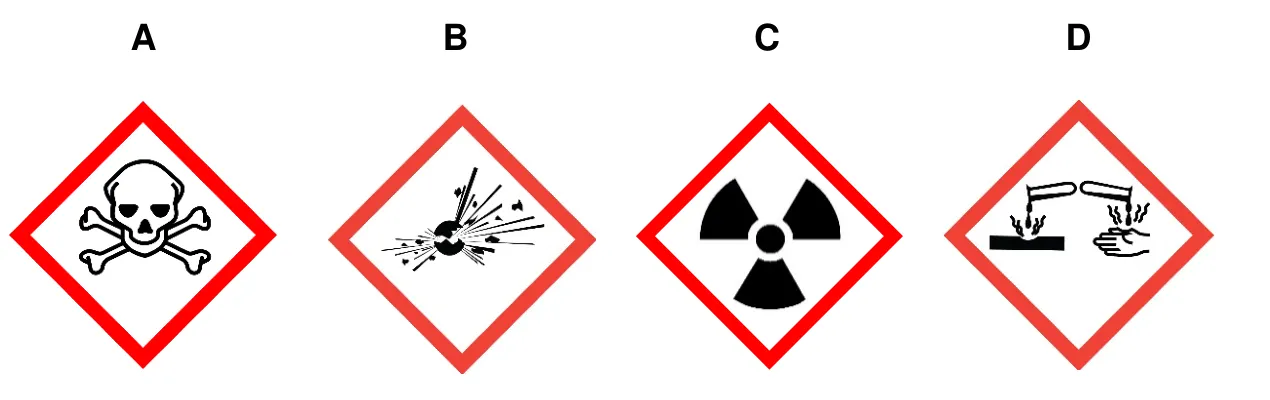
Concentrated sulfuric acid is a corrosive substance.
Which hazard symbol should be labelled on a container of concentrated sulfuric acid?
AToxic (skull and crossbones)
BExplosive
CRadioactive
DCorrosive
Show answer
Answer: D
Corrosive substances attack and destroy living tissue and materials on contact — the symbol shows liquid dripping onto a surface and a hand.
A3
Measurement & units
1 mark
Which is not an SI unit?
Ag (gram)
BK (kelvin)
Cm³ (cubic metre)
Ds (second)
Show answer
Answer: A
The SI base unit of mass is the kilogram (kg), not the gram. Kelvin, cubic metre and second are all SI units.
A4
Measurement & units
1 mark
The boiling point of liquid P is lower than that of water. The student places a thermometer in boiling liquid P.
The diagram below shows part of the stem of this thermometer without numbers, with each small division worth 0.5°C and every 10°C marked.
What is the boiling point of liquid P?
A85.5 °C
B94.5 °C
C100.0 °C
D105.5 °C
Show answer
Answer: A
Since P's boiling point is lower than water's (100°C), options C and D are eliminated. Reading the scale markings gives 85.5°C.
A5
Measurement & units
1 mark
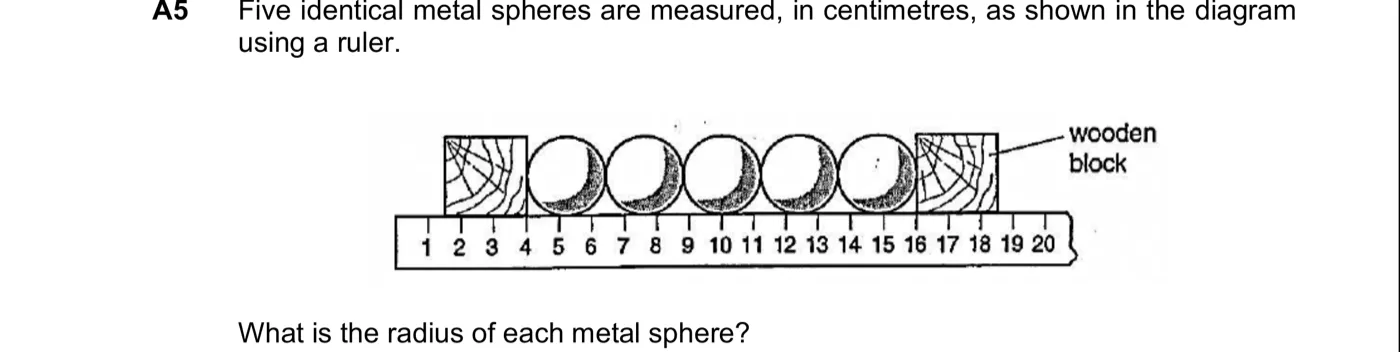
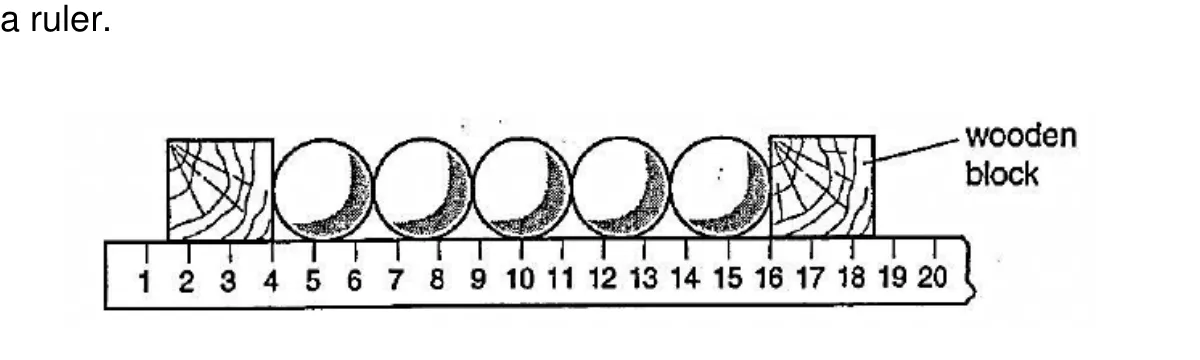
Five identical metal spheres are measured, in centimetres, as shown in the diagram using a ruler.
What is the radius of each metal sphere?
A1.2 cm
B1.6 cm
C2.4 cm
D3.2 cm
Show answer
Answer: A
The 5 spheres span from the 4 cm mark to the 16 cm mark — a total of 12 cm. Diameter of each sphere = 12 ÷ 5 = 2.4 cm, so radius = 1.2 cm.
A6
Materials & properties
1 mark
Plastic screen protectors for mobile devices can be scratched easily. Tempered glass screen protectors are less easily scratched.
Which physical property of a material will prevent it from being scratched easily?
AConductivity
BFlexibility
CHardness
DStrength
Show answer
Answer: C
Hardness is a material's resistance to being scratched or dented.
A7
Materials & properties
1 mark
An object has a high melting point. It is a poor conductor of heat and is hard but fragile. What material could this object be made of?
ACeramic
BFibre
CMetal
DPlastic
Show answer
Answer: A
Ceramics have high melting points, are poor thermal conductors, and are hard but brittle — the classic combination that rules out metals (good conductors) and plastics/fibres (low melting point).
A8
Measurement tools
1 mark
What is the function of the part labelled X on this digital caliper?
ATo cut food sample for measurement
BTo help balance the digital calipers
CTo mark out the outline of an object for measurement
DTo measure the depth of a small test tube
Show answer
Answer: D
X is the thin depth probe that extends from the end of the caliper, used to measure the depth of holes or small containers.
A9
Periodic table
1 mark
Which statement about the Periodic Table is correct?
AElements in the same group have similar physical properties.
BElements in the same group must be all metals, or all non-metals.
CThe Periodic Table does not show any compound or mixture.
DThe properties of elements change from non-metallic to metallic across each horizontal row.
Show answer
Answer: C
The Periodic Table only lists elements — never compounds or mixtures. (A is a common trap: elements in a group share similar chemical properties, not necessarily physical ones — e.g. melting points vary a lot down a group. D has it backwards: properties go from metallic to non-metallic across a period.)
A10
Elements, compounds & mixtures
1 mark
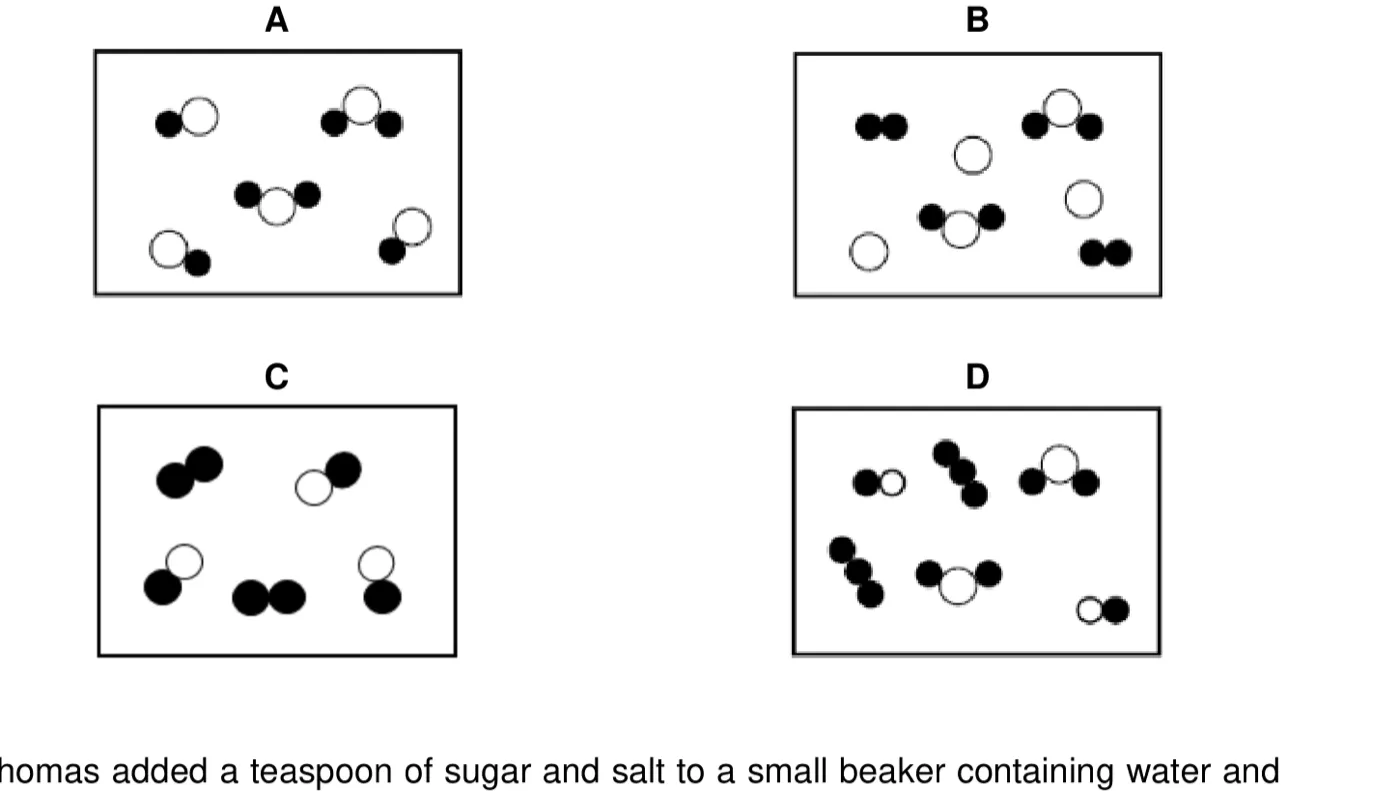
Which diagram represents a mixture of an element and two compounds?
ADiagram A
BDiagram B
CDiagram C
DDiagram D
Show answer
Answer: D
Box D has a 3-atom cluster of the same colour appearing twice (the element), plus two different combined-colour molecules — a 1:1 pairing and a 2:1 pairing (the two different compounds).
A11
Mixtures & solutions
1 mark
Thomas added a teaspoon of sugar and salt to a small beaker containing water and then stirred it. What is formed?
AA solution containing one solute and two solvents.
BA solution containing one solvent and two solutes.
CSugar and salt will react with each other in water and form a suspension.
DSugar, salt and water will react and form a compound.
Show answer
Answer: B
Water is the solvent (the substance doing the dissolving); sugar and salt are both solutes (the substances being dissolved) — dissolving is a physical change, not a chemical reaction.
A12
Mixtures & solutions
1 mark
Which statements correctly describe a suspension?
1. A suspension can be separated by filtration.
2. A suspension allows light to pass through it fully.
3. Insoluble substances can be seen in a suspension.
A1 and 2 only
B1 and 3 only
C2 and 3 only
D1, 2 and 3
Show answer
Answer: B
Suspensions contain visible, insoluble particles that can be filtered out (statements 1 and 3 are true). They are cloudy and scatter light rather than letting it pass through fully, so statement 2 is false.
A13
Separation techniques
1 mark
The table below shows the colours of four solids and their solubilities in water.
| solid | colour | solubility in water |
|---|
| W | green | insoluble |
| X | green | soluble |
| Y | brown | insoluble |
| Z | brown | soluble |
A mixture containing two of the solids is added to excess water, stirred and filtered. A green filtrate and a brown residue are obtained.
Which two solids are present in the mixture?
AW and X
BW and Y
CX and Y
DX and Z
Show answer
Answer: C
The filtrate (passed through the filter) is green and dissolved, so it must be the green soluble solid, X. The residue (left on the filter) is brown and undissolved, so it must be the brown insoluble solid, Y.
A14
Separation techniques
1 mark
Which mixture cannot be separated by magnetic attraction?
ACobalt and copper
BGold and nickel
CIron and cobalt
DSulfur and steel
Show answer
Answer: C
Iron and cobalt are both magnetic, so a magnet attracts both equally — there's no way to separate one from the other this way. Every other pair has exactly one magnetic component.
A15
Separation techniques
1 mark
Which substance can be obtained from a solution by evaporation to dryness?
AIndividual food colouring
BPure water
CSugar
DTable salt
Show answer
Answer: C
Evaporation to dryness collects the dissolved solid by strongly heating away all the water. This works for sugar, but table salt would be safest recovered by crystallisation (strong heating can cause spitting/decomposition), pure water is the liquid being driven off, and mixed food colourings need chromatography to separate the individual dyes.
A16
Separation techniques
1 mark
In 2003, Singapore launched our very own NEWater. To produce NEWater, sewage or used water must undergo two separation techniques in succession before clean drinkable water is obtained.
Which two separation techniques are used to produce drinkable water from sewage or used water?
AMagnetic separation and chromatography
BMicrofiltration and reverse osmosis
CMicrofiltration and simple distillation
DSimple distillation and chromatography
Show answer
Answer: B
NEWater production uses microfiltration to remove suspended solids and bacteria, followed by reverse osmosis to remove dissolved salts and organic molecules.
A17
Light & reflection
1 mark
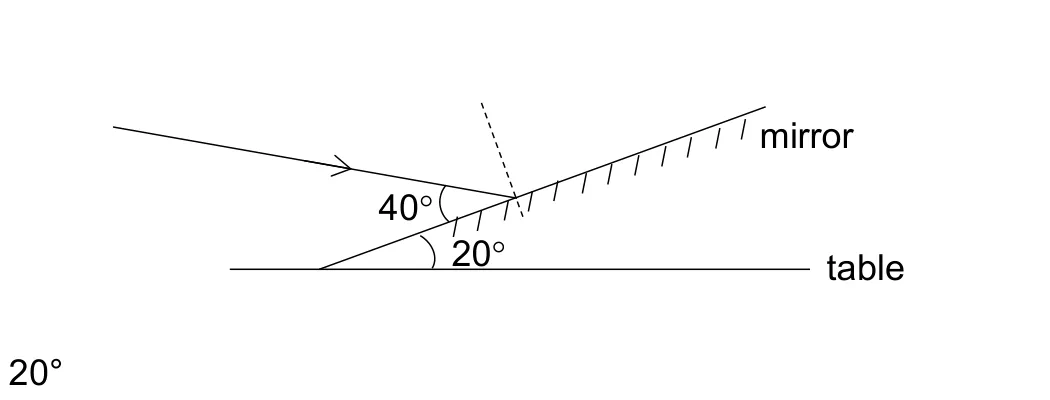
What is the angle of reflection for the ray of light below? The diagram is not drawn to scale.
Show answer
Answer: C
The 40° angle is measured from the mirror surface, so the angle of incidence measured from the normal (dashed line, perpendicular to the mirror) is 90° − 40° = 50°. The angle of reflection always equals the angle of incidence, so it is also 50°.
A18
Light & dispersion
1 mark
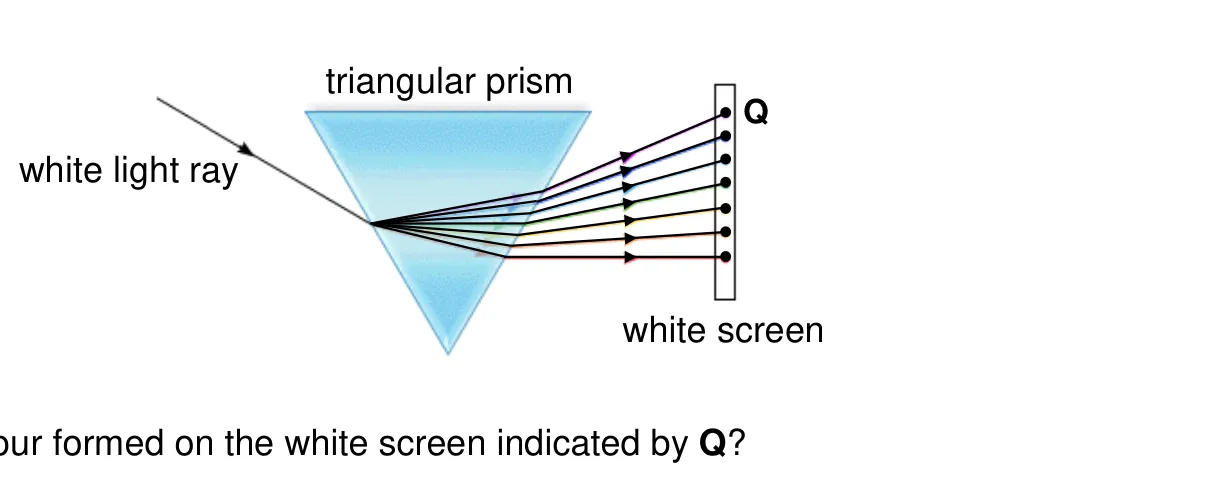
The diagram below shows how white light behaves after it passes through a triangular prism.
What is the colour formed on the white screen indicated by Q?
Show answer
Answer: C
White light disperses into a spectrum because each colour refracts by a different amount. Violet light bends the most, ending up furthest from the original path (at Q, the top); red bends the least, ending up at R (the bottom).
A19
Light & refraction
1 mark
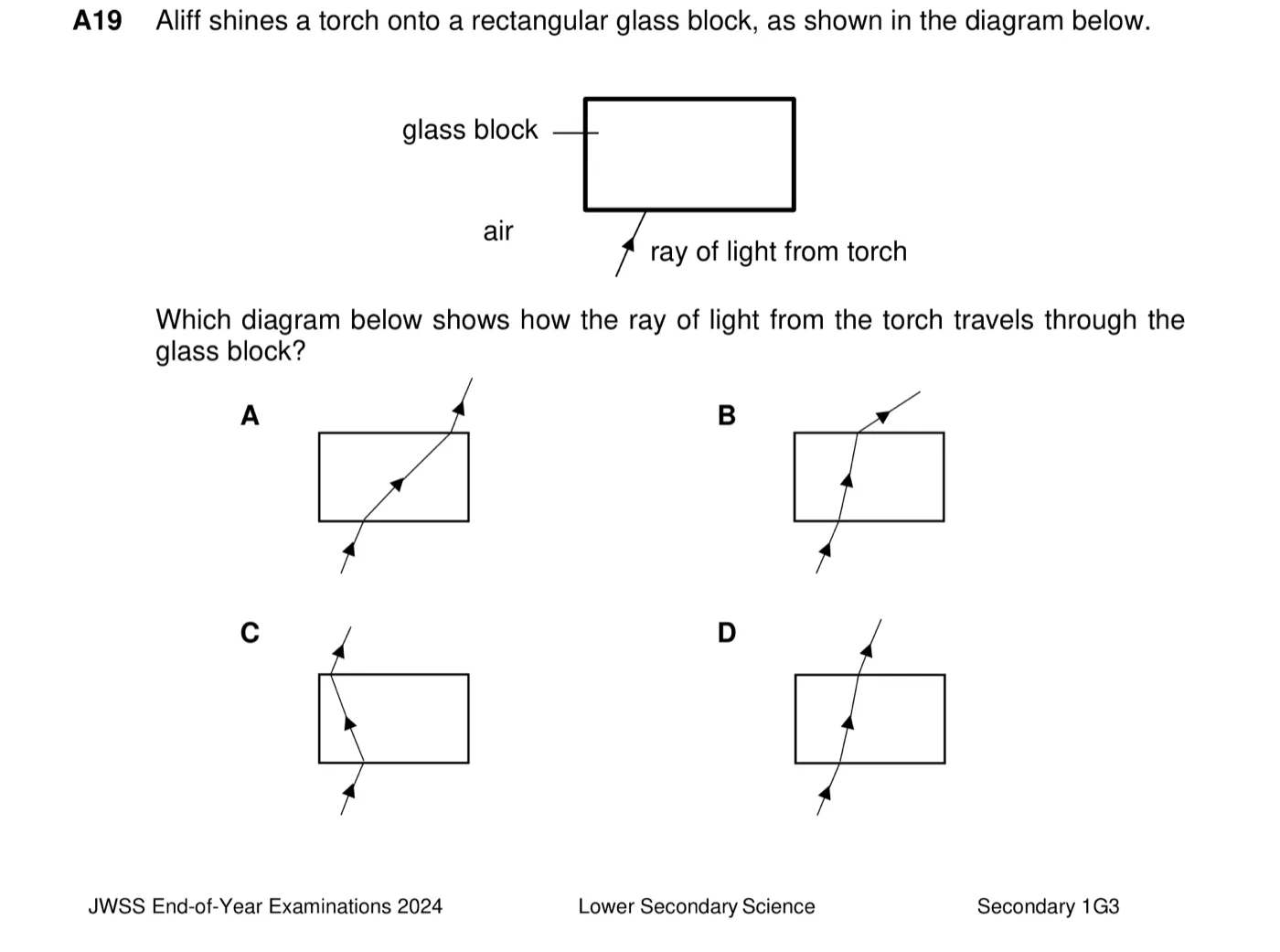
Aliff shines a torch onto a rectangular glass block, as shown in the diagram below.
Which diagram below shows how the ray of light from the torch travels through the glass block?
ADiagram A
BDiagram B
CDiagram C
DDiagram D
Show answer
Answer: D
Glass is optically denser than air, so the ray bends towards the normal on entering and away from the normal by an equal amount on exiting — the ray inside the block is offset sideways but travels parallel to its original direction. Only D shows this correctly.
A20
Light & reflection
1 mark
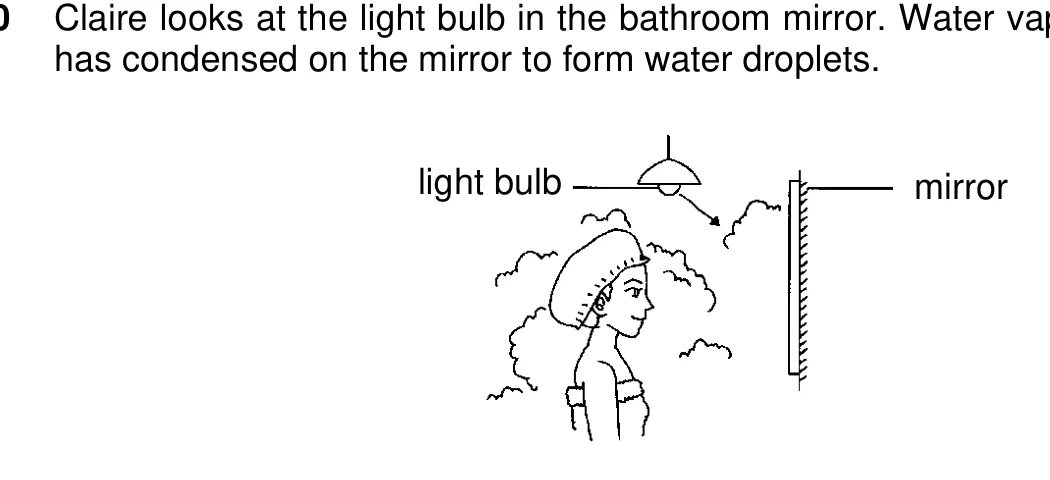
Claire looks at the light bulb in the bathroom mirror. Water vapour from the hot bath has condensed on the mirror to form water droplets.
She sees a distorted image of the light bulb. Which statement explains what Claire sees?
AThe light rays are absorbed by the water droplets.
BThe light rays reflect at different angles due to the water droplets.
CThere is regular reflection of light by the water droplets.
DThere is regular refraction of light by the mirror.
Show answer
Answer: B
The curved surfaces of the water droplets scatter the reflected light in many different directions (irregular reflection), distorting the image instead of forming a clear one.
A21
Cells, tissues & organs
1 mark
Why is the heart considered an organ?
AIt consists of a group of heart muscle cells contracting and relaxing rhythmically.
BIt consists of different tissues working together to pump blood to other parts of the body.
CIt is the basic unit that keeps a human alive.
DIt works with other organ systems to ensure the body gets sufficient blood.
Show answer
Answer: B
An organ is defined as different tissues working together to perform a specific function — here, the heart's muscle, valve and blood vessel tissues work together to pump blood.
A22
Plant structure
1 mark
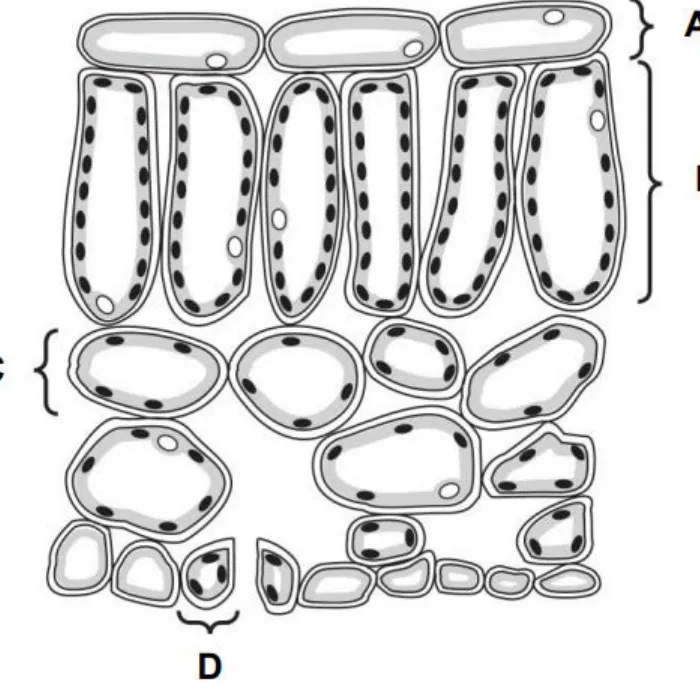
The diagram below shows the cross-section of a leaf.
In which part does most photosynthesis take place?
Show answer
Answer: B
B is the palisade mesophyll — tall, tightly packed column cells located just under the upper epidermis, containing the highest density of chloroplasts, so most photosynthesis happens here.
A23
Cells & division of labour
1 mark
Which is an example of division of labour within a single cell?
1. Chloroplasts contain chlorophyll to make food.
2. The heart and blood vessels form a network to transport blood around the body.
3. The mouth, stomach and small intestine work together to digest food.
4. The nucleus contains genetic material for cell division.
A1 and 4 only
B2 and 3 only
CAll of the above
DNone of the above
Show answer
Answer: A
Division of labour within a single cell means different organelles doing different jobs — that's statements 1 (chloroplasts) and 4 (nucleus). Statements 2 and 3 describe organs/organ systems working together, a different level of organisation entirely.
A24
Particulate nature of matter
1 mark
Which statement about matter is true?
AGas particles are the most numerous compared to solids or liquids per unit volume.
BMatter has mass and occupies space.
CParticles in a liquid are held together by weak forces of attraction.
DWhen a solid is heated, its particles increase in size.
Show answer
Answer: B
This is the definition of matter. (A is false — gas particles are the most spread out, so fewest per unit volume. C is false — liquid particles have stronger attraction than gas particles. D is false — particles themselves don't change size on heating, they just move/vibrate more and spread further apart.)
A25
Particulate nature of matter
1 mark
During cooling, what happens to a substance?
ADensity remains unchanged.
BMass changes.
CVolume and mass change.
DVolume changes.
Show answer
Answer: D
On cooling, particles move closer together, so volume decreases while mass stays the same — this makes density (mass ÷ volume) increase.
A26
Particulate nature of matter
1 mark
A sealed conical flask contains a substance in solid, liquid and gaseous states. Which statement is correct?
AA gas particle has a lower mass than a liquid particle.
BLiquid particles move much slower than those in solids.
CLiquid particles vibrate about their fixed positions.
DSolids have stronger forces of attraction between particles than those in liquids.
Show answer
Answer: D
The strength of the forces of attraction between particles follows solid > liquid > gas. (A is false — mass doesn't change with state. B and C both describe solid behaviour, not liquid — liquid particles move freely past each other, they don't just vibrate in place.)
A27
Elements & compounds
1 mark
Sodium chromate is a substance used in the production of inks and dyes, and also in laboratories for various chemical tests and experiments. It has a chemical formula of Na₂CrO₄.
How many different elements can be found in sodium chromate?
Show answer
Answer: A
The formula Na₂CrO₄ contains three different elements: sodium (Na), chromium (Cr) and oxygen (O) — the subscript numbers count atoms, not different elements.
A28
Elements & compounds
1 mark
Which statement is correct about a molecule of a compound?
AA fixed number of different types of atoms but not chemically combined
BA fixed number of different types of atoms chemically combined
CAny number of different types of atoms but not chemically combined
DAny number of different types of atoms chemically combined
Show answer
Answer: B
A compound has a fixed ratio of different atoms (giving it a fixed melting/boiling point), chemically bonded together. "Not chemically combined" describes a mixture instead.
A29
Atomic structure
1 mark
Which pair of elements has the same number of occupied electron shells?
ALithium and oxygen
BLithium and sodium
COxygen and sulfur
DSulfur and germanium
Show answer
Answer: A
Lithium (2,1) and oxygen (2,6) both have 2 occupied shells. Sodium has 3 shells, sulfur has 3 shells, and germanium has 4 shells — so every other pair differs.
A30
Atomic structure
1 mark
Which statement is false about atoms?
AAll matter is made up of atoms.
BAtoms can have zero neutrons.
CThe nucleus of an atom is positively charged.
DThe protons move around the nucleus.
Show answer
Answer: D
It's the electrons that move around the nucleus, not the protons — protons (along with neutrons) sit inside the nucleus itself. (Hydrogen is a real example of an atom with zero neutrons, so B is true.)
B1
Lab apparatus & safety
5 marks
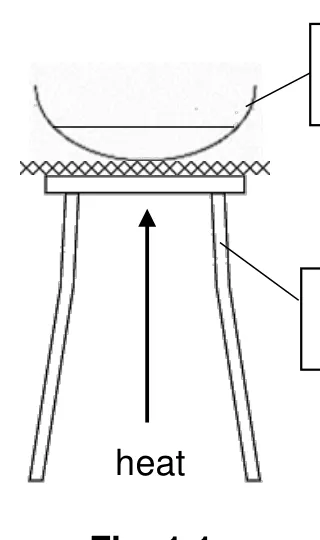
An experiment requires a warm sample of alcohol, which is flammable. To heat up the sample, a student sets up the apparatus and equipment as shown in Fig. 1.1.
a
Name the apparatus labelled (i) and (ii) in the diagram above.
[2]
Show answer
(i) Evaporating dish / crucible (ii) Tripod stand
b
The teacher pointed out a serious mistake she has made in the setup. Describe the mistake and explain the potential danger of this mistake.
[2]
Show answer
She heated alcohol, which is flammable, directly over the flame, and it might catch on fire.
c(i)
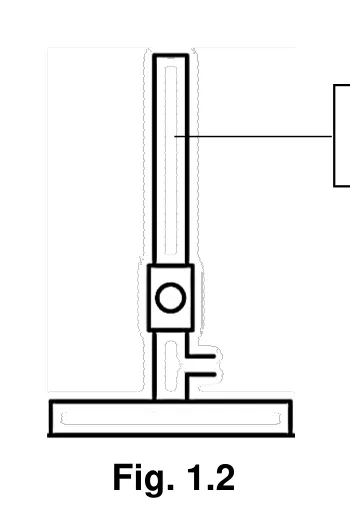
A Bunsen burner was used to supply the heat in the set-up. The air hole was closed initially. Upon ignition, a flame forms from Part H of the Bunsen burner, as shown in Fig. 1.2. Name part H in Fig. 1.2.
[1]
Show answer
c(ii)
The student wishes to use a flame for strong heating of chemicals. Describe what she should do to the Bunsen burner to achieve a hotter flame.
[1]
Show answer
Open the air hole — this lets in more oxygen, giving complete combustion and a hotter, non-luminous flame.
B2
Planning experiments
5 marks
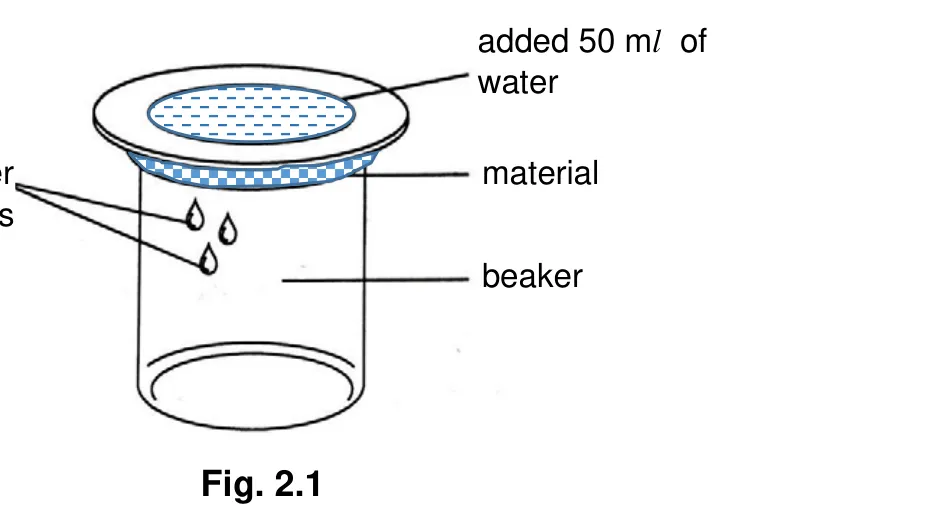
Haziq carried out an experiment to find out the amount of water that four different materials, J, K, L and M can absorb. He placed each material over a beaker and poured 50 mℓ of water onto the material one at a time. Fig. 2.1 shows the setup.
a
He then recorded the volume of water left in the beaker using a measuring cylinder, after each material was tested.
| type of material | volume of water left in beaker (mℓ) |
|---|
| J | 21 |
| K | 14 |
| L | 33 |
| M | 8 |
Identify the variables for the experiment.
[3]
Show answer
Independent variable: type of material · Dependent variable: volume of water left in the beaker · Constant variable: thickness of material used
b
What is the purpose of keeping some variables constant in an experiment?
[1]
Show answer
To ensure a fair test, where only the independent variable (type of material) affects the dependent variable (volume of water left in the beaker).
c
With reference to the results in the table, explain which is the best material for making a bath towel.
[2]
Show answer
M — it left the least amount of water in the beaker, meaning it absorbed the most water, so it should be used as a bath towel to absorb the most water from the body.
B3
Elements, compounds & mixtures
5 marks
Table 3.1 shows the composition of some main components of clean air, which is a mixture.
| substance | percentage composition | element or compound? |
|---|
| nitrogen | 78% | … |
| oxygen | 21% | … |
| water vapour | 0–3% | … |
| other gases | 0.97% | not applicable |
a
Complete the third column in the table above by classifying the different substances as an element or a compound.
[2]
Show answer
Nitrogen: element · Oxygen: element · Water vapour (H₂O): compound
b
Define the term 'mixture'.
[1]
Show answer
A mixture is made up of two or more elements or compounds that are physically combined (not chemically bonded).
c
State two differences in properties between a mixture and a compound.
[2]
Show answer
Difference 1: A compound has a fixed melting and boiling point, while a mixture melts and boils over a range of temperatures.
Difference 2: A compound can only be separated by chemical means, while a mixture can be separated by physical means.
B4
Density & measurement
7 marks
A piece of copper metal was melted down together with a piece of zinc metal. Both were simply poured together and allowed to solidify to form brass. Table 4.1 shows some known quantities of the two metals used.
| metal | mass / g | volume / cm³ | density / g cm⁻³ |
|---|
| copper | 300 | ? | 8.96 |
| zinc | ? | 20 | 7.14 |
a
Suggest the apparatus used to measure the volume of the two metals, using the volume displacement method.
[1]
Show answer
b
Calculate the volume of copper.
[1]
Show answer
Density = mass ÷ volume, so volume = mass ÷ density
Volume of copper = 300 ÷ 8.96
= 33.5 cm³ (3 s.f.)
c
Calculate the mass of zinc.
[1]
Show answer
Mass = density × volume
Mass of zinc = 7.14 × 20 = 142.8 g
= 143 g (3 s.f.)
d
Muthu cut the solidified brass into two equal halves. Describe what happens to the density of each of the halves.
[1]
Show answer
The density remains the same (unchanged) — density is a property of the material, not the amount of it.
e
Shania and Huiting each took the 300 g copper and weighed it several times using an electronic balance.
| reading 1 | reading 2 | reading 3 | average |
|---|
| Shania | 299.5 | 300.2 | 299.7 | 299.8 |
| Huiting | 301.4 | 301.5 | 301.4 | 301.4 |
(i) Whose results are more accurate? Explain your answer.
(ii) Whose results are more precise? Explain your answer.
[3]
Show answer
(i) Shania — her results are closer to the actual/true value of 300 g.
(ii) Huiting — her results are closer to each other (more consistent/repeatable).
B5
Particulate nature of matter
5 marks
Table 5.1 shows the melting and boiling points of three substances P, Q and R.
| substance | melting point / °C | boiling point / °C |
|---|
| P | −30 | 72 |
| Q | 138 | 541 |
| R | −92 | −6 |
a
What is the state of substance P at 0 °C?
[1]
Show answer
P's melting point is −30°C and boiling point is 72°C, so at 0°C (between the two) it is in the liquid state.
Liquid
b
Draw the arrangement of particles of substance Q at 100 °C.
[1]
Show answer
Q's melting point is 138°C, so at 100°C (below its melting point) it exists as a solid.
Particles arranged in a closely packed, regular (orderly) pattern, since substance Q is a solid at 100°C.
c
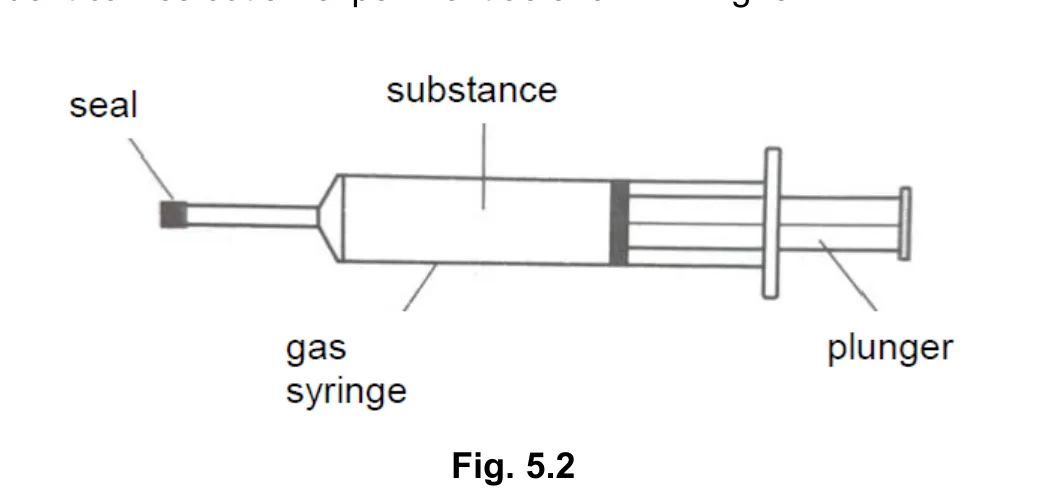
A student carries out an experiment as shown in Fig. 5.2, where the gas syringe is filled with one of the three substances (P, Q or R) at room temperature (25°C), sealed, and the plunger pushed in.
| initial volume / cm³ | final volume / cm³ |
|---|
| 50.0 | 39.5 |
State and explain which of the three substances (P, Q or R) is most likely to produce this result.
[3]
Show answer
R. It is a gas at room temperature (25°C, above its boiling point of −6°C), so there are large spaces between its particles that can be compressed. When compressed, the particles are pushed closer together, hence its volume can decrease (become smaller).
B6
Particulate nature of matter
4 marks
A bottle of perfume was accidentally overturned and the liquid contents spilled onto the floor of a room. After some time, the smell of perfume spread throughout the entire room.
a
Describe how the smell of perfume spread throughout the room.
[2]
Show answer
The liquid perfume gains heat and evaporates into a gas, which diffuses from a region of higher concentration (on the floor) to a region of lower concentration, across the room.
b
On a warm day, it was observed that the smell of perfume spread more quickly. Based on your understanding of the particulate nature of matter, suggest why this is so.
[2]
Show answer
The temperature is higher, hence the average kinetic energy of the perfume particles is higher, causing it to diffuse throughout the room faster.
B7
Periodic table
4 marks
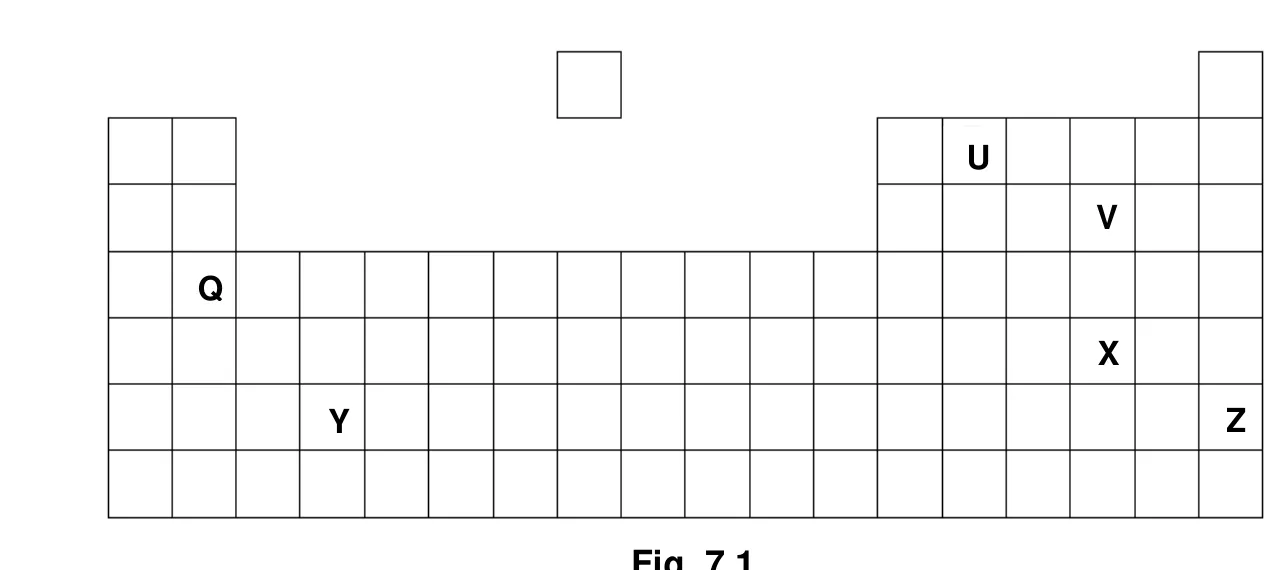
Fig. 7.1 shows a simplified outline of the Periodic Table with elements indicated by letters.
a
Which of the elements are metals and non-metals?
[2]
Show answer
Metals: Q, Y · Non-metals: U, V, X, Z
b
State the name of one element in the same period as Q.
[1]
Show answer
c
Using the Periodic Table of the Elements and the information from Fig. 7.1, write the nuclide notation for atom Y.
[1]
Show answer
B8
Cell biology
7 marks
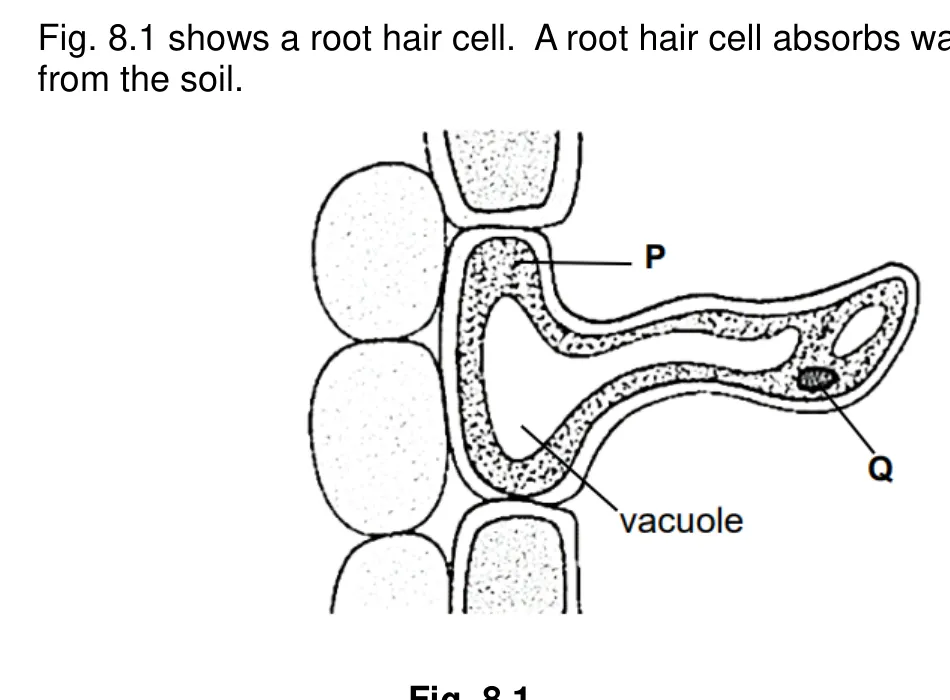
Fig. 8.1 shows a root hair cell. A root hair cell absorbs water and mineral salts from the soil.
a
(i) Name parts P and Q.
(ii) State the function of the vacuole.
[2]
Show answer
(i) P: Cytoplasm · Q: Nucleus
(ii) The vacuole stores water and dissolved substances (nutrients and waste).
b
Explain why the root hair cell is a plant cell.
[2]
Show answer
It has a cell wall and a large central vacuole, which are structures found in all plant cells.
c
State two differences between the root hair cell and a human cheek cell.
[2]
Show answer
Difference 1: The root hair cell has a cell wall, while the cheek cell does not.
Difference 2: The root hair cell has one large (central) vacuole, while the cheek cell has small, numerous vacuoles (or none).
B9
Solubility
6 marks
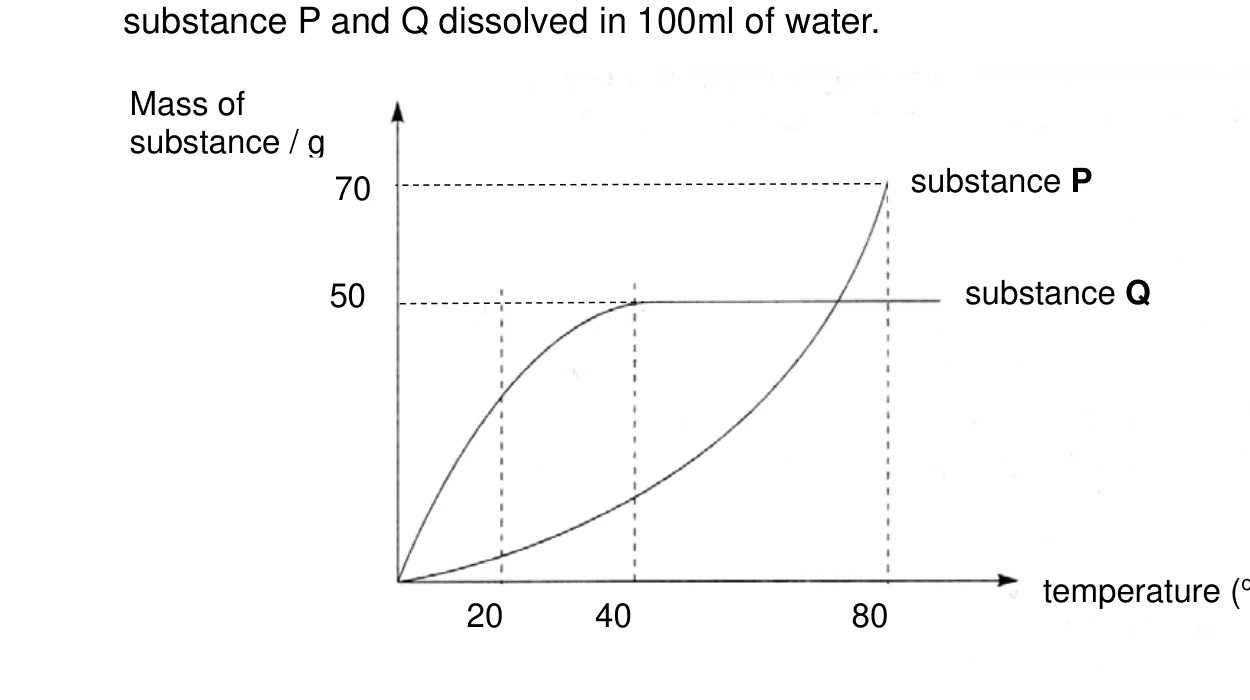
The effect of temperature on the solubility of two substances P and Q in the same volume of solvent was investigated. Fig. 9.1 shows the mass of substance P and Q dissolved in 100 mℓ of water.
a
What can you deduce about the solubility of substance P as temperature increases?
[1]
Show answer
The solubility of substance P increases as temperature increases.
b
At 80 °C, 60 g of substance P and Q were added to 100 mℓ of water. Explain whether a solution or suspension is formed for P and Q.
[2]
Show answer
For P: a solution is formed, since all 60 g dissolves (P's solubility at 80°C is above 70 g, which is more than 60 g).
For Q: a suspension is formed, since the maximum mass of Q that can dissolve at 80°C is 50 g, so 10 g of Q remains undissolved.
c
Apart from temperature, state one other factor which affects solubility.
[1]
Show answer
The type of solvent used (or: the type of solute used).
B10
Light & reflection
6 marks
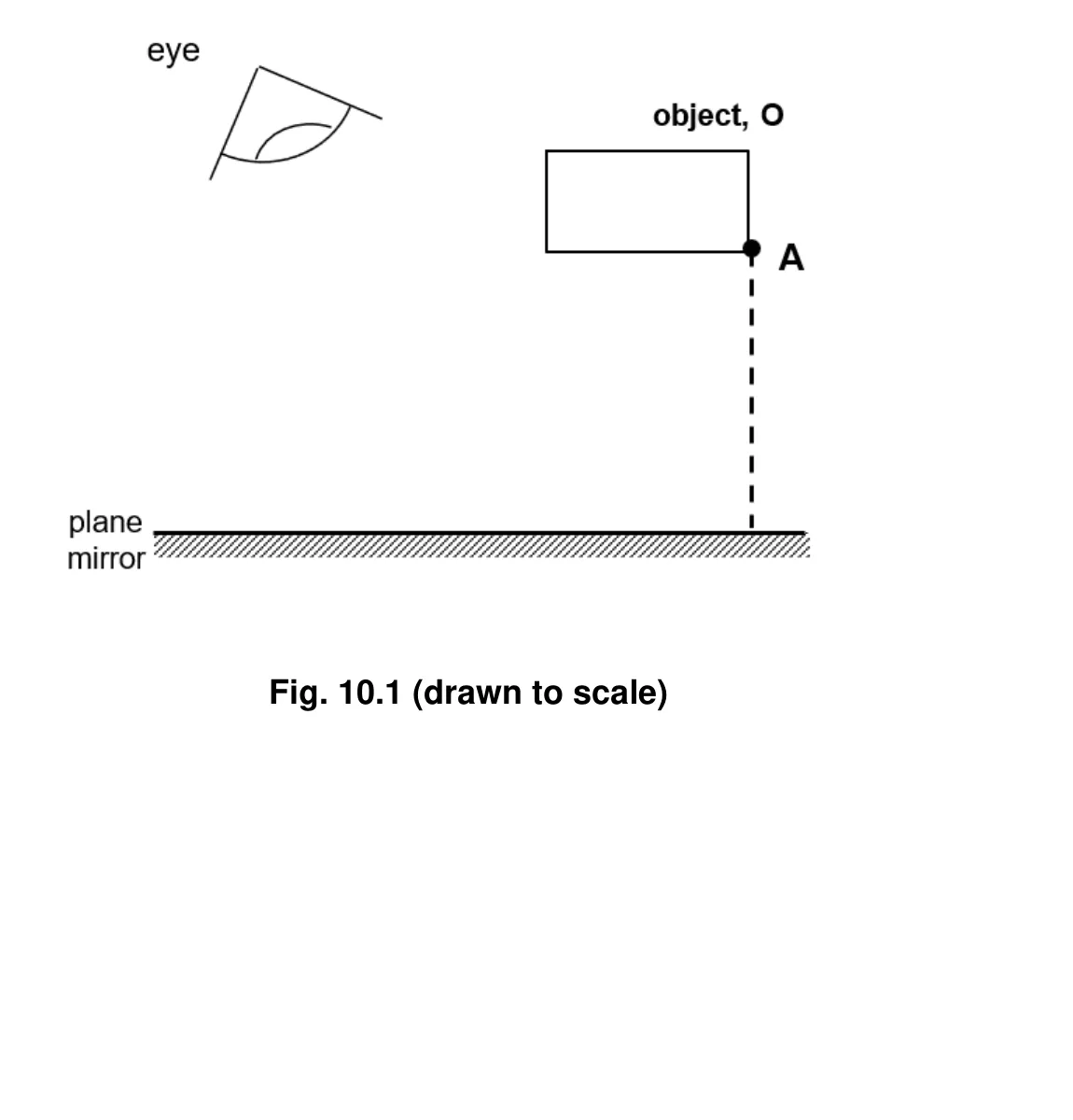
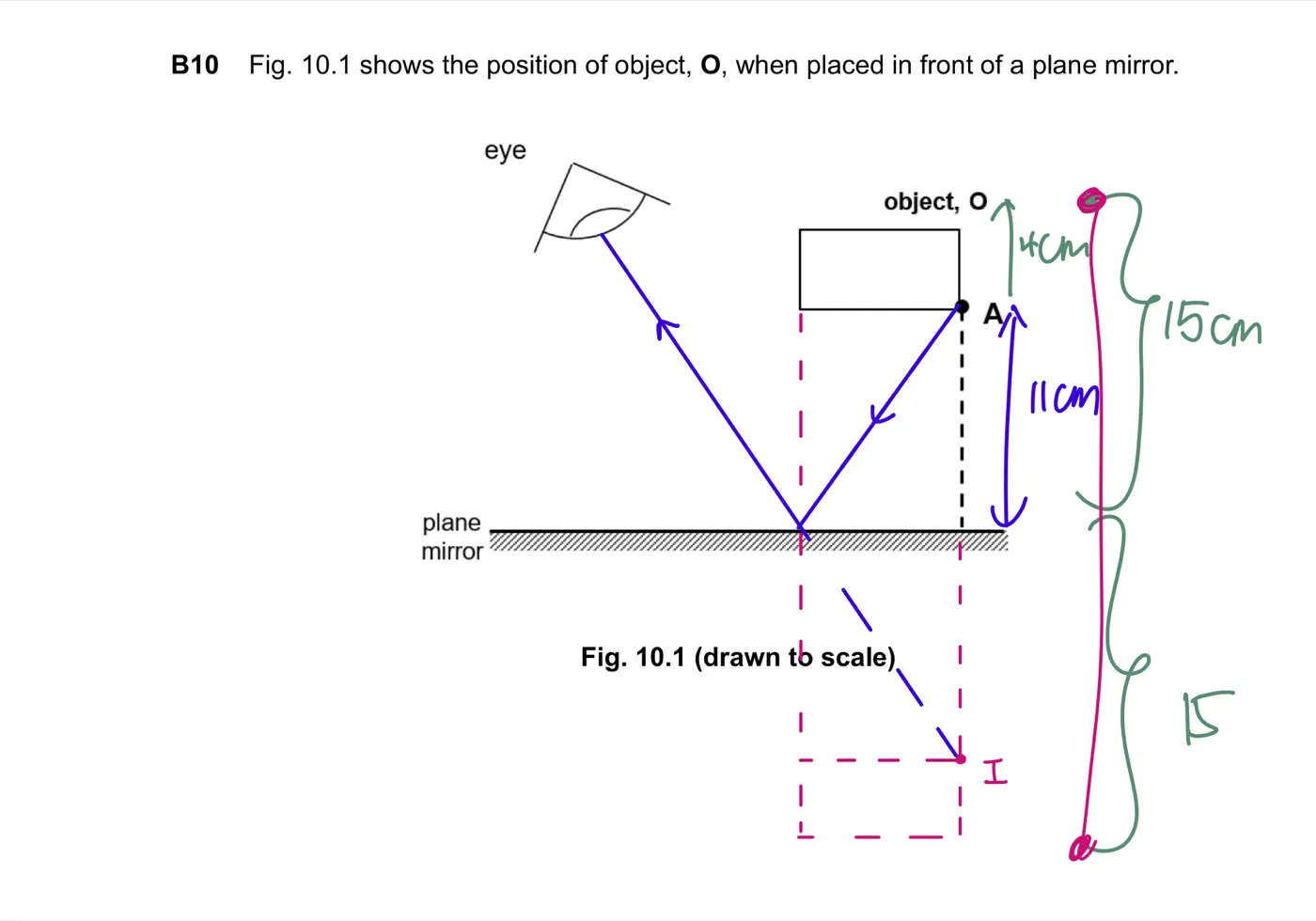
Fig. 10.1 shows the position of object, O, when placed in front of a plane mirror.
a
(i) On Fig. 10.1, locate and draw the image of object O. Label the image formed as "I".
(ii) Draw one light ray leaving object O from point A to illustrate how the eye sees the image of O in the mirror.
[4]
Show answer
The image I is located at the same perpendicular distance behind the mirror as the object is in front of it (same size, laterally inverted). The ray from A reflects off the mirror obeying the law of reflection (angle of incidence = angle of reflection) and travels up to the eye — see the completed construction above.
b
Point A on the object is originally at 11 cm from the mirror. It is then moved 4 cm further away from the mirror. Describe (i) how the distance between point A and the image will change, and (ii) how the height of the image will change.
[2]
Show answer
(i) The distance between A and the image will increase, to 30 cm (since the image is always as far behind the mirror as the object is in front, the total object-to-image distance = 2 × 15 cm = 30 cm).
(ii) The height of the image stays the same (no change) — a plane mirror always forms an image the same size as the object.
B11
Atomic structure
6 marks
Table 11.1 below shows the subatomic particles present in four atoms, J to R.
| Atom | protons | neutrons | electrons |
|---|
| J | 11 | 12 | 11 |
| L | 9 | 10 | 9 |
| M | 3 | 4 | 3 |
| Q | 15 | 16 | 15 |
| R | 20 | 20 | 20 |
a
Which atom has the smallest nucleon number?
[1]
Show answer
Nucleon number = protons + neutrons. M: 3+4=7 is the smallest of all five atoms.
M
b
State the atoms that belong to the same Group.
[1]
Show answer
Electronic configurations: J = 2,8,1 → 1 valence electron. M = 2,1 → 1 valence electron. Same number of valence electrons (going down a group) means same Group.
J and M (Group 1)
c
State the electronic configuration of atom R.
[1]
Show answer
R has 20 protons and 20 electrons (calcium).
2,8,8,2
d
Draw the electronic structure of an atom of L in the space below.
[1]
Show answer
L has 9 electrons (fluorine): 2 electrons in the first shell, 7 electrons in the second (outermost) shell.
e
Explain what is meant by 'atom is electrically neutral'.
[2]
Show answer
The number of protons (positive charge) equals the number of electrons (negative charge) in an atom, so the positive and negative charges cancel out, giving the atom no overall/net charge.
FAQ
Common questions about this paper
What topics are tested in this 2024 Jurong West Sec 1 Science EOY paper?
This paper covers the scientific method, laboratory safety and hazard symbols, measurement and SI units, materials and their physical properties, elements/compounds/mixtures, separation techniques (filtration, chromatography, magnetic separation, evaporation, NEWater production), the particulate nature of matter, light (reflection, refraction and dispersion), cell biology (plant and animal cells, organs), the Periodic Table, and atomic structure — a broad sweep of the Sec 1 Lower Secondary Science syllabus.
How do you tell the difference between a solution and a suspension?
In a solution, the solute has fully dissolved into the solvent — the mixture is clear (though it may be coloured) and cannot be separated by filtration. In a suspension, insoluble particles remain visible and settle over time, and can be separated out by filtration.
How do you find the angle of reflection from a diagram?
Always measure the angle of incidence and angle of reflection from the normal — an imaginary line perpendicular to the mirror at the point where the light ray hits it — not from the mirror surface itself. The law of reflection states the angle of reflection always equals the angle of incidence.
What is the difference between an element, a compound, and a mixture?
An element contains only one type of atom. A compound contains two or more different types of atoms chemically bonded together in a fixed ratio, giving it a fixed melting and boiling point. A mixture contains two or more elements or compounds that are only physically combined (not chemically bonded), so it can be separated by physical means and melts/boils over a range of temperatures.
Is Lower Secondary Science the same as O-Level Combined Science?
Lower Secondary Science (Sec 1-2) is a single combined subject covering foundational biology, chemistry and physics topics. It builds the base knowledge students then specialise from in Sec 3-4, when they choose between separate O-Level subjects (Physics, Chemistry, Biology) or Combined Science.