GCE O-Level Chemistry (6092/02) · Paper 2 · October/November 2026 · 80 marks
Want the full blank question paper PDF download and answer key with annotations to help you ace your exams?
Annotations by Teacher Abigail
Vanillin is a natural compound found in vanilla food flavouring. Vanillin can be made synthetically from aqueous glucose at 20°C. The reaction uses an enzyme.
A sample of bromine contains two isotopes, 79Br and 81Br.
Lead(II) chromate, PbCrO4, is a yellow compound used in some paints. Lead(II) chromate is made by a precipitation reaction between aqueous lead(II) nitrate and aqueous potassium chromate.
Ethene reacts with steam in an addition reaction to form ethanol.
CH2=CH2 + H2O → C2H5OH


50.0 cm³ of dilute aqueous copper(II) sulfate is electrolysed using inert electrodes, as shown in Fig. 7.1.

The total mass of copper formed at the negative electrode is measured every minute. Fig. 7.2 shows a graph of the results.

Many devices, such as mobile phones, use lithium-ion batteries. A new battery for a mobile phone has a mass of 30.0 g. Lithium-ion batteries contain carbon, lithium and cobalt.
| percentage composition by mass | |
|---|---|
| cobalt | 15.0 |
| lithium | 9.0 |
How a lithium-ion battery works. Lithium-ion batteries have two electrodes, each in contact with an electrolyte. A semi-permeable barrier separates the electrodes. When discharging, electrons flow through the device from one electrode to another; when charging, the flow of electrons is reversed.

Reactions at the electrodes when discharging: electrode 1: Li → Li+ + e−. The lithium ions travel from electrode 1 through the electrolyte and the semi-permeable barrier (which does not allow any other substances through) to electrode 2: electrode 2: CoO2 + Li+ + e− → LiCoO2.
PAA is an addition polymer used in diapers. The partial structure of PAA is shown in Fig. 9.1.


Table 10.1 shows information about element X and the compounds silicon dioxide and sodium chloride.
| formula | melting point/°C | boiling point/°C | electrical conductivity at room temperature | type of bonding | type of structure | |
|---|---|---|---|---|---|---|
| element X | X2 | −218 | −183 | … | covalent | … |
| silicon dioxide | SiO2 | 1713 | 2950 | does not conduct | … | giant |
| sodium chloride | NaCℓ | 801 | 1465 | does not conduct | ionic | … |
| formula | m.p./°C | b.p./°C | conductivity | bonding | structure | |
|---|---|---|---|---|---|---|
| element X | X2 | −218 | −183 | does not conduct | covalent | simple |
| silicon dioxide | SiO2 | 1713 | 2950 | does not conduct | covalent | giant |
| sodium chloride | NaCℓ | 801 | 1465 | does not conduct | ionic | giant |
Element Y is a metal. Table 11.1 shows some properties of element Y, lead(II) bromide and element Z.
| bonding | state at r.t.p. | melting point/°C | electrical conductivity at r.t.p. | other information | |
|---|---|---|---|---|---|
| element Y | metallic | solid | 420 | conducts | Y is malleable |
| lead(II) bromide | ionic | solid | 373 | does not conduct | formula is PbBr2 |
| element Z | metallic | solid | 1455 | conducts | Z forms coloured compounds |
Fig. 11.1 represents the arrangement of particles in a metallic lattice structure (key: ⊕ positively charged ions; ⊖ delocalised electrons).

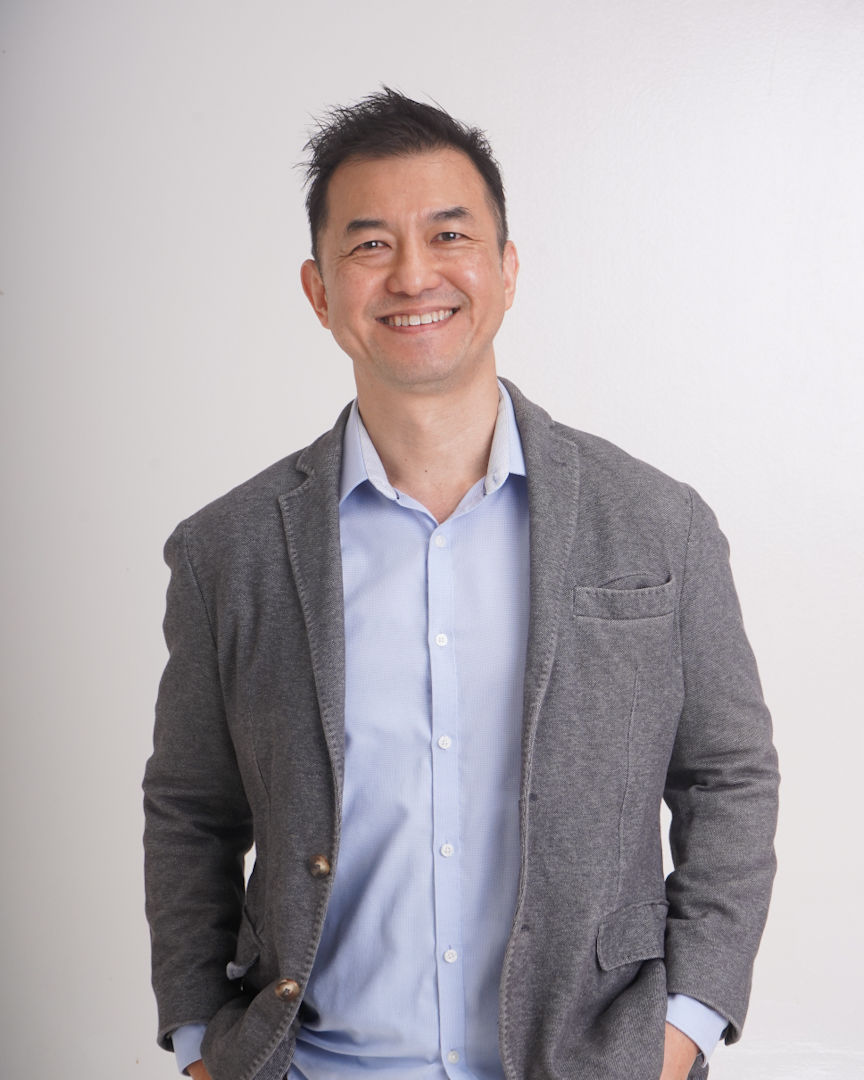
Meet Your Tutor
The crux of teaching is really to ensure that my students have a comprehensive understanding of the concepts taught, allowing them to build a solid foundation without resorting to mere memorisation.
I firmly believe in error analysis as well, to ensure my students learn from their mistakes and turn them into chances to grow and do well.
Superpower: I go beyond the “what's” (just telling you the answers), and focus more on the “how's” and “why's” to bridge conceptual gaps.
Fun fact: I enjoy birdwatching — I can recognise most bird calls!
Other Chemistry Tutors
All Sec 3 & Sec 4 Pure Chemistry Class Slots
|
Subject
|
Location
|
Day
|
Start | End |
Tutor
|
|---|---|---|---|---|---|
| S3 Pure Chemistry | Kovan | Mon | 4:30 PM | 6:30 PM | |
| S3 Pure Chemistry | Marine Parade | Tue | 5:00 PM | 7:00 PM | |
| S3 Pure Chemistry | Tampines | Wed | 4:30 PM | 6:30 PM | |
| S3 Pure Chemistry | Novena | Wed | 5:00 PM | 7:00 PM | |
| S3 Pure Chemistry | Kovan | Wed | 5:30 PM | 7:30 PM | |
| S3 Pure Chemistry | Tan Kah Kee | Wed | 7:30 PM | 9:30 PM | |
| S3 Pure Chemistry | Bishan | Thu | 4:30 PM | 6:30 PM | |
| S3 Pure Chemistry | Punggol | Thu | 5:00 PM | 7:00 PM | |
| S3 Pure Chemistry | Marine Parade | Thu | 5:00 PM | 7:00 PM | Demi |
| S3 Pure Chemistry | Kovan | Thu | 6:30 PM | 8:30 PM | |
| S3 Pure Chemistry | Marine Parade | Thu | 7:30 PM | 9:30 PM | Chun Guan |
| S3 Pure Chemistry | Novena | Sat | 10:00 AM | 12:00 PM | |
| S3 Pure Chemistry | Tan Kah Kee | Sat | 11:00 AM | 1:00 PM | |
| S3 Pure Chemistry | Kovan | Sat | 12:00 PM | 2:00 PM | |
| S3 Pure Chemistry | Jurong East | Sat | 1:00 PM | 3:00 PM | |
| S3 Pure Chemistry | Tampines | Sat | 9:00 AM | 11:00 AM | |
| S3 Pure Chemistry | Jurong East | Sun | 11:00 AM | 1:00 PM | |
| S3 Pure Chemistry | Tampines | Sun | 2:00 PM | 4:00 PM | Chun Guan |
| S3 Pure Chemistry | Kovan | Sun | 3:00 PM | 5:00 PM | |
| S4 Pure Chemistry | Kovan | Wed | 7:30 PM | 9:30 PM | |
| S4 Pure Chemistry | Bishan | Mon | 5:00 PM | 7:00 PM | |
| S4 Pure Chemistry | Kovan | Mon | 7:00 PM | 9:00 PM | |
| S4 Pure Chemistry | Tan Kah Kee | Mon | 7:30 PM | 9:30 PM | |
| S4 Pure Chemistry | Kovan | Tue | 5:00 PM | 7:00 PM | |
| S4 Pure Chemistry | Novena | Tue | 5:00 PM | 7:00 PM | |
| S4 Pure Chemistry | Marine Parade | Tue | 7:00 PM | 9:00 PM | |
| S4 Pure Chemistry | Jurong East | Tue | 7:30 PM | 9:30 PM | |
| S4 Pure Chemistry | Tampines | Wed | 6:30 PM | 8:30 PM | |
| S4 Pure Chemistry | Kovan | Thu | 4:30 PM | 6:30 PM | |
| S4 Pure Chemistry | Tampines | Thu | 5:00 PM | 7:00 PM | |
| S4 Pure Chemistry | Bishan | Thu | 6:30 PM | 8:30 PM | |
| S4 Pure Chemistry | Marine Parade | Thu | 7:30 PM | 9:30 PM | Demi |
| S4 Pure Chemistry | Tan Kah Kee | Fri | 5:30 PM | 7:30 PM | |
| S4 Pure Chemistry | Kovan | Fri | 7:00 PM | 9:00 PM | Demi |
| S4 Pure Chemistry | Tampines | Fri | 7:30 PM | 9:30 PM | |
| S4 Pure Chemistry | Punggol | Sat | 9:00 AM | 11:00 AM | |
| S4 Pure Chemistry | Tampines | Sat | 11:00 AM | 1:00 PM | |
| S4 Pure Chemistry | Kovan | Sat | 12:00 PM | 2:00 PM | |
| S4 Pure Chemistry | Kovan | Sat | 3:00 PM | 5:00 PM | |
| S4 Pure Chemistry | Novena | Sat | 3:00 PM | 5:00 PM | |
| S4 Pure Chemistry | Jurong East | Sun | 9:00 AM | 11:00 AM | |
| S4 Pure Chemistry | Punggol | Sun | 1:00 PM | 3:00 PM | |
| S4 Pure Chemistry | Tan Kah Kee | Sun | 2:00 PM | 4:00 PM | |
| S4 Pure Chemistry | Kovan | Sun | 5:00 PM | 7:00 PM |
FAQ
Where can I download the 2026 O-Level Chemistry Paper 2 blank PDF for free?
You can download the blank 2026 O-Level Chemistry (6092/02) question paper, along with the annotated answer key, for free from this page. Click the ‘Download for Free’ button, fill in your details, and the PDF download link will be emailed to you instantly.
What topics are tested in the 2026 O-Level Chemistry Paper 2 (6092/02)?
Paper 2 tests air pollution and the carbon cycle, enzymes as catalysts, isotopes and nuclide symbols, ionic equations and percentage composition, hydrocarbons and the bromine water test for saturation, addition reactions and energy profile diagrams, electrolysis of aqueous copper(II) sulfate with inert and reactive electrodes, redox reactions in lithium-ion batteries, addition polymers and their disposal, and then either a question on simple molecular vs giant covalent vs ionic structures, or a question on metallic bonding, alloys and ionic lattices in Section B.
Why does a reactive copper anode lose a different mass to an inert electrode during electrolysis?
With an inert (e.g. graphite or platinum) anode, only the cathode gains mass as Cu2+ ions are reduced to copper. With a reactive copper anode, the anode itself is oxidised (Cu → Cu2+ + 2e−) at the same rate copper is deposited at the cathode (Cu2+ + 2e− → Cu), since the same quantity of charge passes through the circuit. So the anode loses exactly as much mass as the cathode gains.
Why is water not used as the solvent in a lithium-ion battery's electrolyte?
Lithium metal reacts quickly with water to form lithium hydroxide and hydrogen gas, which would consume the lithium at electrode 1 and prevent the proper discharging reaction. H+ ions from water would also be selectively discharged over Li+ ions, blocking the reduction of Li+ needed when the battery charges. An organic solvent avoids both problems.
Why do ionic compounds and giant covalent structures have very different melting points even though both involve strong bonds?
Both giant ionic lattices and giant covalent (macromolecular) structures need a large amount of energy to melt because of strong bonds throughout the structure. Simple molecular substances, by contrast, have only weak intermolecular forces between molecules, which need very little energy to overcome — so they have much lower melting points than either ionic or giant covalent structures.